

Please explain how FOREST works as a lobbying group?
FOREST was founded in 1979 by a lifelong pipe smoker, Sir Christopher Foxley-Norris, who began to feel social pressure over his smoking habits. As a result, he created the FOREST lobby group and over the years we have received donations from major tobacco companies. That support has now started to decline because the tobacco industry is increasingly focusing on harm-reduction products. We have never promoted smoking and we acknowledge its health risks. Our position, however, is that society should be educated about the risks of smoking but adults must have the right to choose.
FOREST has had four directors so far, three of whom were non-smokers, myself included. This shows that FOREST is not a “smokers’ organization” but an “organization standing up for the rights of smokers.” To me, smoking has always symbolized freedom. In the UK this freedom has been eroded by 25 years of legislation forcing people to quit – from the advertising ban to the ban on smoking indoors, through to plain packaging and the ban on menthol cigarettes. We fought hard against all of these with petitions, media campaigns, parliamentary evidence. One campaign that started successfully was when we collected 260,000 signatures against plain tobacco packaging. At that time the British government even postponed introducing the law, but in the end politics won.
What issue is FOREST currently fighting for?
Right now, our most important issue is the generational ban. The idea is to raise the legal purchasing age by one year every year, until eventually no adult will be allowed to buy tobacco. We believe this is absurd and unworkable – it is laughable to imagine that a 29-year-old can buy tobacco while a 27-year-old cannot. If this proposal is introduced in 2027, the UK will be the first country to legislate a generational ban on tobacco purchases. The endgame is a complete ban on the sale of tobacco to adults of all ages.
We believe this would push smokers toward the black market and treat young adults like children. If at 18 you can vote, drive, buy alcohol, join the army, and apply for a credit card, why shouldn’t you be able to buy tobacco as well? Especially when smoking rates among young people are already at a historic low.
Our role as a political and media lobbying group is to deliver these arguments to MPs, ministers, and the public. Ministers often refuse to meet us because of our funding. But the reality is that without the support of tobacco companies we could not exist. Frankly, we believe they have a duty to stand up for their consumers who still smoke. At the same time, we strongly support harm-reduction products such as e-cigarettes, heated tobacco, and nicotine pouches.
Alongside political lobbying, we are constantly working in the media with press releases, interviews, opinion pieces. In this respect we have managed to maintain a fairly high profile as a political lobby group in the UK.
How many people do you work with, and what does the structure of the organization look like?
When I started 20 years ago, we had an office in London with four full-time employees. We were never a large organization, but over the past 15 years funding has decreased, so today I am the only full-time staff member. Instead of permanent employees, we hire external professionals on short-term contracts – for example designers, researchers, campaign organizers – to implement specific projects. This way we avoid the costs and complications of layoffs, and we don’t need to maintain an expensive London office either.
At any given time I work with three or four people, but the structure is lean. The key point is that (as far as we know) we are essentially the only professional smokers’ rights group in Europe. Over the years, many advocacy groups operated across Europe, but most were run by volunteers. With that structure the problem is the lack of time volunteers can dedicate, and it is also harder to maintain disciplined messaging.
For a lobbying group, controlled communication is essential. We need to sound reasonable, not extreme, especially in the media. We do not deny the health risks of smoking, and we do not argue for unlimited smoking rights, nor do we reject all restrictions. At the same time, our stance is simple: there are already plenty of laws in place, we do not need more.
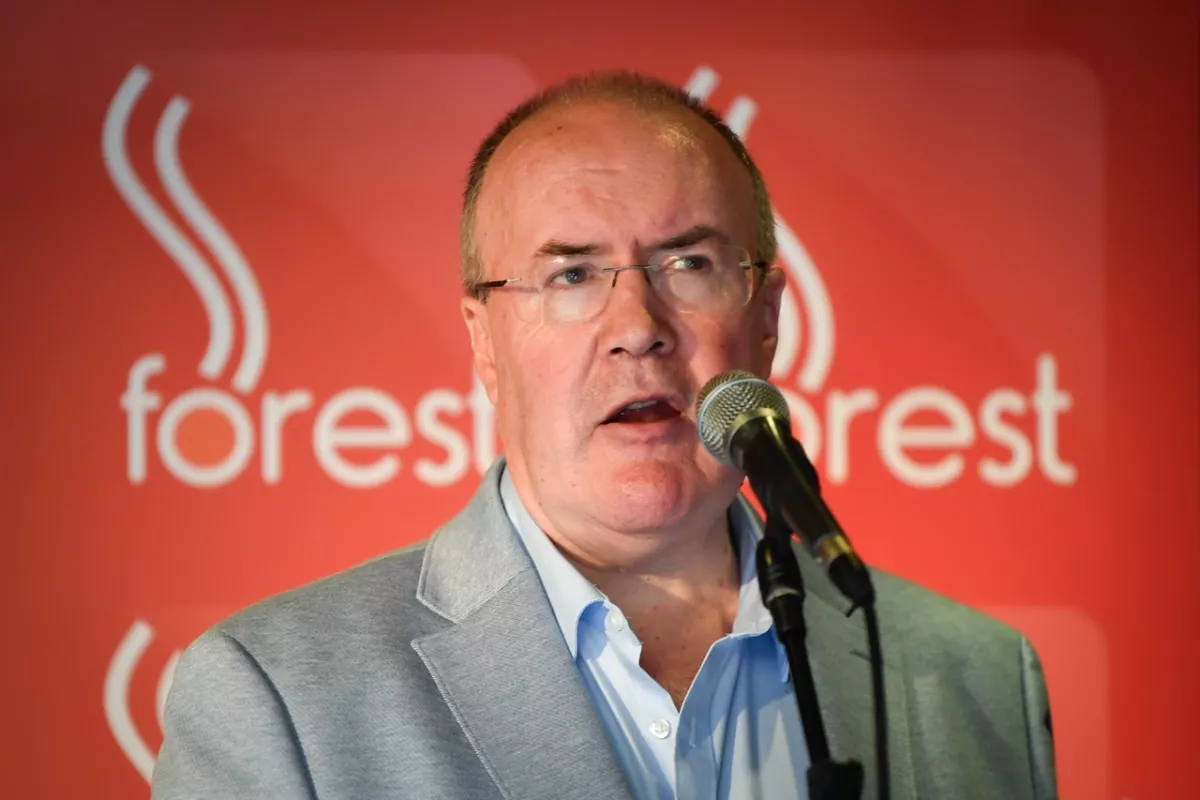
What will be FOREST’s next event or initiative to support smokers’ rights, either regarding the generational ban or more broadly?
At the moment we are fully focused on opposing the generational ban, which is currently before Parliament. It is unlikely we can stop it, because the UK government has a large majority in Parliament, and much of the opposition supports the policy as well. The numbers suggest it will be very, very difficult to persuade enough MPs to oppose the bill, so it will almost certainly pass and come into force in 2027.
However, this does not mean the process ends there. Nigel Farage’s Reform Party openly opposes the bill, and according to opinion polls it could be part of the next government. If that happens, we will lobby them to repeal the law. A good example is New Zealand, where the generational ban was adopted, but later overturned by a new coalition government that includes the (conservative–libertarian) ACT Party which opposed the policy. The challenge in the UK is that by the time the next election comes, the law may already be in force, which makes it harder to reverse.
For us the issue goes beyond smoking, because it is about adults’ freedom of choice. If the state can ban tobacco by age, what comes next? E-cigarettes? Alcohol? If the government decides which adult choices are acceptable, then in our view we no longer live in a free society. The UK was once proud of its freedom, but restrictions are increasing, and smokers – who now make up only 12% of adults – are an easy target. Alcohol is still socially accepted because its consumers are the majority, but 50 years ago smoking was just as normal.
Our main message is that today smoking is in the crosshairs, but tomorrow it could be something else that consumers enjoy. At FOREST we believe consumers need to stand together. One problem we have faced in recent years, however, is that while we support 100 percent the rights of e-cigarette users, many of them are unwilling to return the favor when it comes to smokers. This is partly because the vast majority of e-cigarette users are former smokers and many former smokers are even more opposed to smoking than those who have never smoked. This is probably because ex-smokers feel guilty about their former smoking habits or become overly enthusiastic about smoke-free living. In this regard, e-cigarette advocates may feel that smokers can be “thrown under the bus.”
(You can read the second part of the interview by clicking here.)
The Hungarian version of this article appeared in the 2025/10 issue of Tobacco Magazine.
